Why Do Music Research?
Reflecting on my PhD Journey
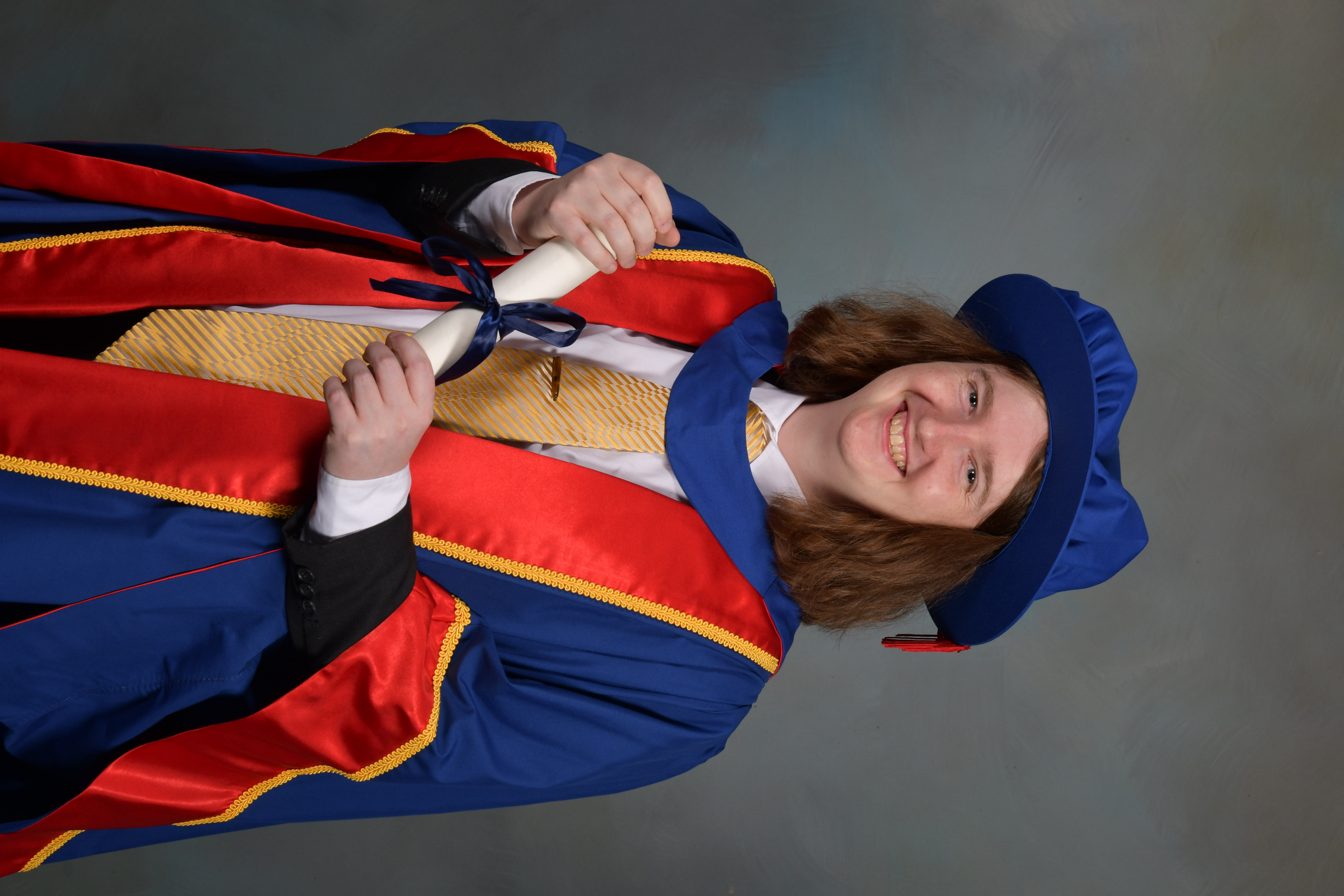
Four years of hard work recently came to its conclusion for me, as I officially graduated with my Doctor of Philosophy from Edith Cowan University. It is a moment to celebrate and to reflect. In today’s blog post, I wanted to look back over the past four years of my PhD journey, and share some of the things I learnt along the way.
My PhD was in the field of music. A frequent question I received over the past four years was—“you can do a PhD in music?!” Indeed, you can!
A PhD is a university degree based on research, usually taking the form of a thesis of around 100,000 words. A PhD thesis generally aims to make a significant original contribution to knowledge—that is, it breaks new ground, in some way, on a particular topic or question. This process involves several steps. Firstly, one must explore the existing research in the field to identify gaps in the knowledge. Next, the PhD researcher must conceptualise a study to address this gap, undertake the study itself, contemplate the significance of the findings, then write all of this up to create the final thesis. In all, a PhD represents hundreds or thousands of hours spent exploring a particular topic or question.
The nature of a PhD is that it is very specific. In Australia, a PhD is the highest level of formal education one can attain. It is the pointy end of the pyramid of learning. We all receive broadly the same foundation in primary school, with basic skills in reading, writing and mathematics. Yet each step of education beyond this becomes more increasingly focused towards our personal interests or inclinations, as we choose high school subjects, bachelor’s degrees, or master’s specialisations. A PhD is the summit of this, in that, as every PhD focuses on a different topic, each PhD graduate possesses a unique domain of expertise. People might want to pursue PhDs for many reasons—career specialisation, academic aspirations, pure curiosity. There are economic factors that affect one’s ability to pursue a PhD. For many, keeping up with the time required for research alongside work, family or other commitments can be a challenge if not an impossibility. Even for those who are lucky enough make it to the end, it requires an enormous sacrifice of time and energy.
Music Research
So why do a PhD in music?
Musicology is the academic discipline of music research. It is a broad umbrella that encompasses a variety of research areas related to music, including music theory, analysis, history, sociology, psychology, ethnomusicology (the study of music in traditional cultures), performance practice and more. As musicology frequently crosses into other disciplines, a PhD in music might involve reading more broadly than music itself.
For many musicians, musicology is seen as its own discipline, separate from more practical pursuits like performance, composition or pedagogy. Thus, as most who are drawn to study music at the tertiary level are led by a passion for performing, composing or teaching, undertaking musicological research would require sacrificing the precious time needed for the honing of their beloved artform. A counter-argument to this would be that, in today’s world, having a detailed knowledge of music history and cultural context, not to mention being able to think deeply and articulate ideas, is an increasingly important part of the job of a musician, particularly for those in leadership positions, such as teachers, conductors and artistic directors. Even star performers are occasionally expected to make profound comment on the music they are performing for interviews or Instagram reels. These are precisely the skills developed in a research degree, and for this reason I can see value in all musicians having at least some research experience.
An increasingly common middle-ground, for those wanting to pursue doctoral studies in music, these days, is what’s known as “practice-led research”. In such a case, one creates an artistic work of some kind, perhaps a composition or performance, that is informed or led in some way by research. The artistic work is included as part of the final submission and is supported by a written component called an exegesis, which essentially explains how the artistic work is related to research, as well as presenting some of the aspects of a traditional thesis (like a literature review).
For me, though my research journey was initially led by a desire to extend my craft as a performer, I ultimately decided to pursue “pure research” rather than “practice-led research”. In my opinion, the model of the traditional thesis allowed for the exploration of my topic in much greater depth, and has allowed me freedom to explore and experiment with the application of research to my practice without the burden of having to justify it for an examiner. Though in some sense, this has certainly meant a sacrifice of practice time, I feel that the depth of what I have learnt from this journey would not have been as great, had I taken the “practice-led research” path.
Curiosity
I was led to music research by curiosity. I wanted to understand more about the music I was passionate about, and having read most of the existing books on the subject, felt that certain questions just hadn’t been answered. But, though I went in looking for answers to particular questions, in the end I got to learn so much more than I thought I would at the beginning. This is the point I wanted to make with today’s blog post. The most valuable lesson of the PhD journey, for me, was the journey itself, and being open to following the path it led me.
The music I’m most passionate about is the music of Franz Liszt. As a teenager, I was struck by the dazzling beauty of his compositions. This led me to read Alan Walker’s monumental three-volume biography of Liszt, which sparked my curiosity about Liszt’s piano-playing, apparently so striking to his contemporaries. During my bachelor studies, I came to learn about the early music movement, period instruments and historically informed performance—the idea that we can understand how music of the past was performed by studying historical sources. The link between musical performance and research is a defining aspect of this movement. Naturally, I was curious to see if the early music approach could be applied to Liszt. I soon came across Kenneth Hamilton’s book After the Golden Age, one of the seminal studies in the field of late nineteenth century performing practice, and the remarkable fact that so many of Liszt’s own students had made recordings.
My research journey began with my honours project, in the last year of my bachelor’s degree. Wanting to study the recordings of Liszt’s pupils, and see what these might tell us about how Liszt may have expected his music to be played, I set about comparing the recordings of the seven different Liszt pupils who recorded his Hungarian Rhapsody No.12. The findings from this study whetted my appetite to go further in this direction. So I began a research master’s, to explore the remaining Liszt pupil recordings of the Hungarian Rhapsodies. Through this, I came to appreciate Liszt’s work as a writer. His work as composer and pianist were well known to me, but that he was also a prolific and profound writer was something that I came to understand through my research. He wrote extensively on music and musicians, and his writings give us an invaluable insight into his thinking and suggest ways in which we might interpret his music. A selection of Liszt’s writings, and the voluminous collection of writings by his pupils, became the focal point of my master’s research. What I learnt from this study influenced not merely how I might play the Hungarian Rhapsodies—but profoundly changed my approach to piano-playing in general, in a way that I had not imagined. My PhD would be similar.
I finished my master’s around the time the COVID pandemic was beginning. Though I had hoped to spend some time pursuing my dreams as a pianist, the COVID lockdowns suddenly changed those fortunes. So I began a PhD. During my master’s, I’d come to feel something of an affinity for one particular Liszt pupil—Arthur Friedheim. I knew well his extensive catalogue of piano roll recordings and his rather curious disc recordings. And, during my master’s, I stumbled upon a few forgotten sources related to Friedheim—a series of articles he published in the 1920s, and a fascinating volume called The Student’s Chopin. These were the sources I wanted to study in more detail, looking at Friedheim’s approach to the piano, and wondering what this might tell us about his great teacher, Liszt.
But, as the research itself began, the journey took me in a different direction. I started searching for concert reviews of Friedheim’s performances, as a way to understand his piano-playing. Then, I took my trip to Maryland to visit the Friedheim archive at the Peabody Institute, Baltimore and the International Piano Archives at the University of Maryland. I soon found that I had amassed a large collection of documents that allowed me to trace in great detail the course of Friedheim’s life and career. The strength of this material, which I had not really expected to find, led me to shift the focus of my research from Friedheim’s performance practice to Friedheim’s biography and the study of his professional activities as pianist, writer, teacher and editor.
Studying Friedheim’s life and work was fruitful in a variety of ways. Some of the things I learnt include:
- Practical knowledge about how to build and sustain a career as a concert pianist
- Insights into how to build and maintain a repertoire of music
- Lessons in Friedheim’s successes and shortcoming in managing his career, which can be applied today
- Details of Friedheim’s ideas on piano technique, which have been profoundly important for my own playing and teaching
- Understanding of Friedheim’s thoughts on musical interpretation, particularly in Liszt’s music
While I wrote, to some length, on all these things (and more) in my final thesis, I’m not sure that a reader of my thesis will necessarily come away with the feeling of profound learning that I gained came from doing the study itself. In the future, I plan to rework the research into publications that will better encapsulate some of this learning to share it with others.
When I began my PhD, I did not know exactly where the journey would take me, or what I would learn. What it gave me, in the end, was not so much knowledge on the topic I chose to explore, but wisdom about what it means to go searching.
For now, I am trying to practically apply the things I learnt in my work as a pianist and teacher, and let my curiosity lead my next step on the research journey. Why do music research? Because music is life-long learning!
You can read more about my research, and find a link to download my thesis here.